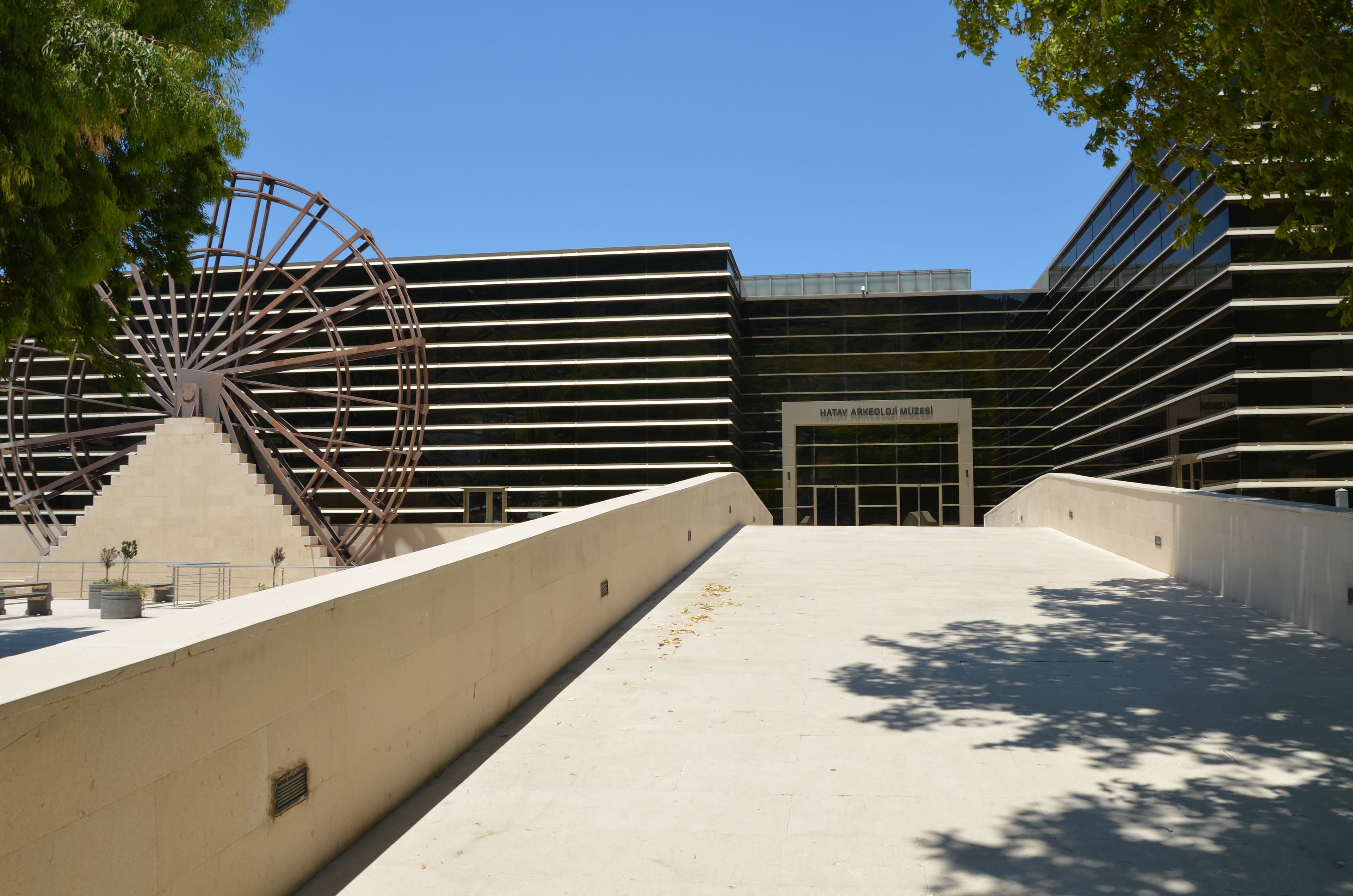
Archaeology museum in Antakya, Turkey
The Hatay Archaeology Museum (Turkish: Hatay Arkeoloji Müzesi) is the archaeology museum of Antakya, Turkey. It is known for its extensive collection of Roman and Byzantine Era mosaics. The museum is located in Antakya, the main city of Hatay. Construction of the museum started in 1934 on the recommendation of the French archaeologist and antiquities inspector Claude M. Prost. It was completed in 1938 and came under Turkish control in 1939 following Hatay's unification with Turkey. The museum was opened to the public in 1948 and re-opened in 1975 following renovation and expansion. The old location has been vacated, and the museum now is in a newly built museum (opening date of the second phase in 2019), much larger than the old one and with exhibits that have partly been excavated recently. With 3,500 sqm of mosaics displayed in 10,700 sqm of exhibition space and 32,754 sqm of total indoor space, the museum is claimed to be the largest mosaic museum in the world. The museum sustained some damage in the 2023 Turkey–Syria earthquake.
Hatay Archaeology Museum is located in Antakya, Turkey. Its specific geographic coordinates are latitude 36.2019 and longitude 36.1600.
The museum was established in 1948, making it a significant historical institution in the region.
Archaeology museum in Antakya, Turkey... It is a key destination for those interested in culture and history in Turkey.